

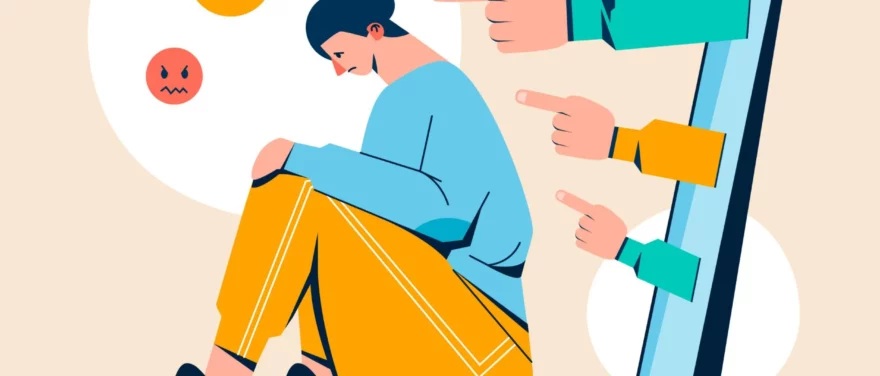
Are bullying and cyberbullying conditioned behaviours?
Research says it starts from home.
According to a research conducted by Dan Olweus in Cambridge, 1993, children who bully are likely to come from home situations in which there is little warmth and little positive adult attention and in which discipline is inconsistent and periodically emotionally and physically aggressive. These young people may not develop adequate empathy for others and may not make connections between their actions and the consequences of such actions in a cause-effect manner.
When they get in trouble for hurting others, they may blame the victims they hurt, adults or anyone in authority, instead of re-examining and reconsidering their own behavior, which only makes matters worse. In some cases, parents encourage bullying behavior and model it for the children at home, as Dr. Sarles noted.
As for cyber bullying, according to research published in 2004, parents play an especially important role. Students who bully online are more likely to report poor parent-child relationships and a lack of parental monitoring of online behavior.
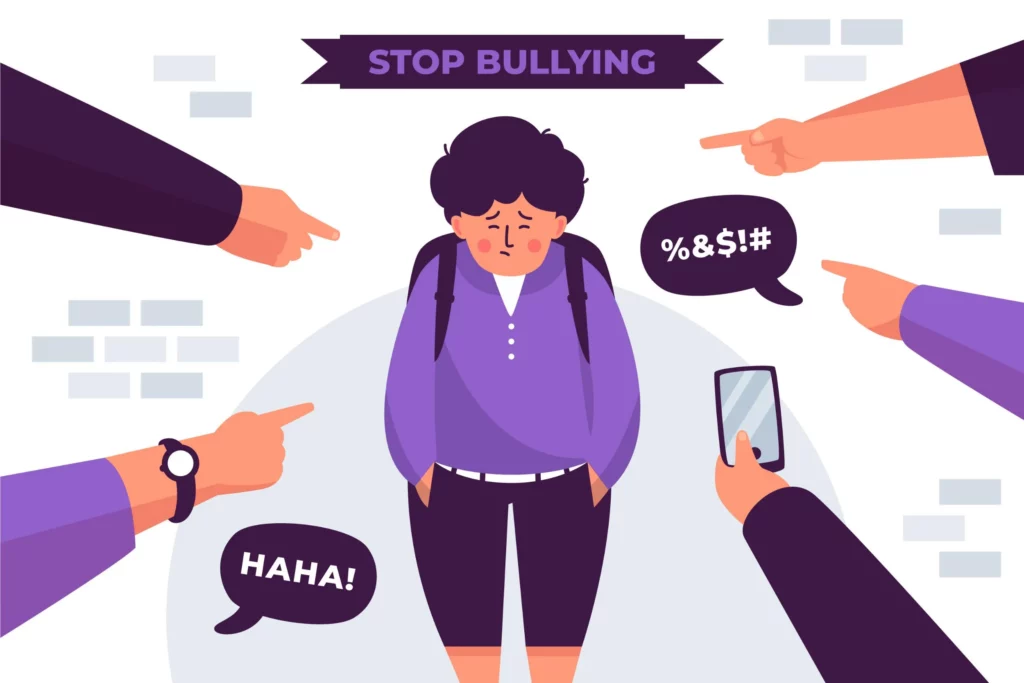
Other conditions that foster cyber bullying :
Bullies are natural instigators, and in cyberspace, bullies can entice the participation of other students who may be unwilling to bully in the real world, encouraging them to join in. Kids who stand around doing nothing in a real life bullying incident often become active participants in online harassment. The detachment and anonymity afforded by cyberspace due to non-physical presence makes bullies out of people who would never become involved in a real life incident. The Internet makes bullying more convenient and since the victim’s reaction remains unseen people who wouldn’t normally bully don’t take it as seriously.
In addition, peers, teachers, and parents also can influence the likelihood that a youth will engage in bullying online. Young people who believe other students are bullying online are more likely to engage in the behavior themselves. However, those who believe the adults in their lives will punish them for bullying online are less likely to go ahead and attack someone online anyway.
Empathy and other psychological aspects
Bullies tend to be impulsive; they often have characteristics of oppositional defiant disorder, often have a hard time following school rules. These children or teens may have conduct disorder, and there’s the possibility of having antisocial personality disorders as well.
Furthermore, they seem to derive satisfaction from the mere act of inflicting harm and intimidating others. They exhibit less empathy towards their peers and a more domineering attitude. Although bullies are both pro-actively and re-actively aggressive, bullies appear to use proactive aggression to establish dominance and leadership in their peer groups.
As for their levels of empathy, and according to research conducted by Menesini, bullies are often very aware of others’ feelings, yet are completely unable or unwilling to allow those feelings to affect them by any means.
In addition, adolescent cyber bullies tend to have high emotional tendencies and low self-control. They have also been found to engage in other problematic behaviours, which can encompass self and socially destructive behaviours. They have been found to be more likely to “engage in substance abuse and have higher levels of participation in school violence” according to Sourander et al., 2010, and Wang, Iannotti, and Luk, 2012.
There are also clear links between bullying/cyber bullying and anti-social behaviours. A study showed that 40% of people who reported being bullies as children or adolescents had criminal convictions of any sort at the age of twenty four.
Tech-use and Cyber bullying
Children who are victims of cyber-bullying are more likely to use technology to pick on people themselves, according to research published in January 2011. A survey of secondary school pupils found girls were more likely to bully others using texts or the internet, as boys stuck to more traditional forms of cruelty.
The results showed a strong correlation between pupils who rated themselves as victims also seeing themselves as cyber-bullies. The anonymous nature of cyber-bullying provides victims the motivation and opportunity to retaliate via the same method.
“Bully-victims are a group that we don’t know much about,” Dr. Sarles said. These children or adolescents are usually victims first, and then they become bullies, and they are over represented as perpetrators in instances of school shootings.
The psycho-physiological associations
Being a cyber victim only has been associated with:
1. Living in a family with other than two biological parents
2. Perceived difficulties in emotions, concentration, behaviour, or getting along with other people
3. Headache
4. Recurrent abdominal pain
5. Sleeping difficulties
6. Not feeling safe at school.
On the other hand, being a cyber bully only was associated with
1. Perceived difficulties in emotions, concentration, behaviour, or getting along with other people
2. Conduct problems
3. Infrequent helping behaviors
4. Frequently smoking or getting drunk; headache and not feeling safe at school.
Being both cyber bully and cyber victim was associated with all of these conditions.
The victims of bullies tend to be shy, quiet, socially awkward, and sometimes labelled “nerds” or “weirdos” They tend to be non-assertive and have few friends and low self-esteem, and have poor social skills. In other words, victims tend “not to fit in,” which is a stronger predictor of being the victim of a bully than other physical characteristics such as height and weight. Bullies are more likely to pick on socially awkward children than those with obvious physical abnormalities or disabilities, to maintain the imbalance of power.
Just like how most bullying, even cyber bullying, begins at school—where children meet and spend much of their time, many interventions against bullying start at school.
“You have to get people to agree that bullying is not for kids,” by encouraging parents to go to their children’s schools and advocate for a no-tolerance policy, Dr. Sarles said. Only through real and tangible awareness of the repercussions of the problem will prevention programs implemented on a social or social level be of any use.
Check out NoBullying.com’s useful cyberbullying checklist.