

In today’s interconnected world, traditional perimeter-based cybersecurity approaches are no longer sufficient to protect against sophisticated and persistent cyber threats. As organisations embrace digital transformation and adopt cloud computing, IoT devices, and remote work environments, a new paradigm is needed to address the evolving threat landscape. Cybersecurity mesh—a transformative concept that re-imagines cybersecurity as a dynamic, distributed, and adaptable defence ecosystem. This article explores the concept of cybersecurity mesh, its principles, benefits, and potential challenges, highlighting its potential to enhance security in an interconnected and ever-changing digital environment.
What is Cybersecurity Mesh
The cybersecurity mesh is a concept and approach to cybersecurity that aims to provide a more flexible, scalable, and decentralised security framework in the digital ecosystem. It is designed to adapt to the dynamic nature of modern threats and the increasing interconnectedness of devices, networks, and users.
In a traditional cybersecurity model, security measures are primarily focused on protecting the perimeter of a network or system. However, with the proliferation of devices, cloud services, and remote work, the traditional perimeter-based approach has become less effective. The cybersecurity mesh addresses this challenge by shifting the focus from protecting a specific network boundary to protecting individuals, devices, and data, regardless of location or network.
Cybersecurity Mesh Key Principles
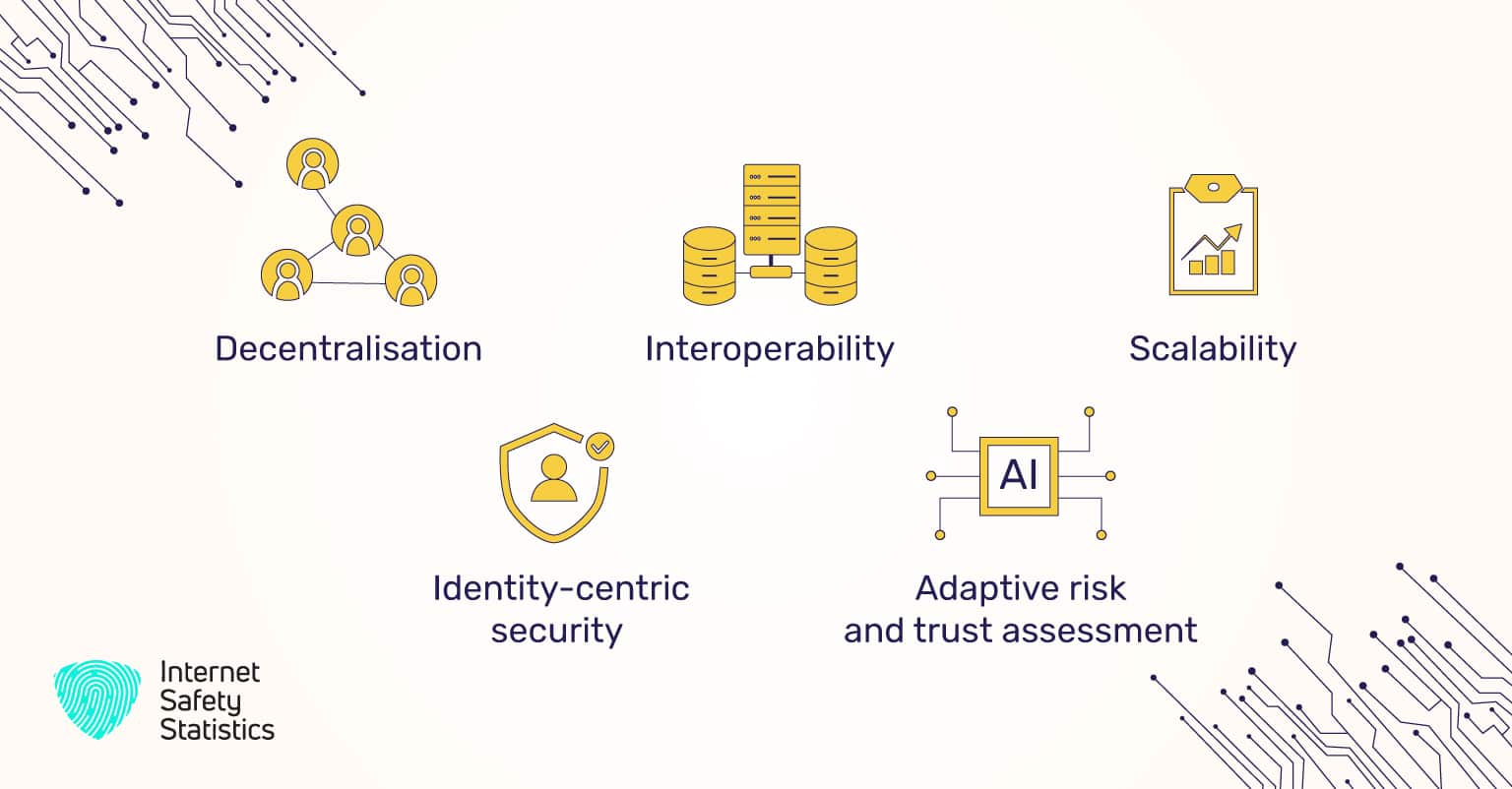
The cybersecurity mesh emphasises the following fundamental principles:
- Decentralisation: The cybersecurity mesh emphasises distributing security functions and controls across various interconnected nodes rather than relying on a centralised security architecture. This decentralisation allows for more effective and efficient security measures that adapt to threats’ dynamic nature and the expanding digital ecosystem.
- Scalability: The cybersecurity mesh is designed to scale seamlessly as the number of devices, users, and interconnected systems grows. It accommodates networks’ increasing complexity and size, ensuring that security measures can be applied consistently and effectively regardless of the scale.
- Interoperability: It promotes seamless integration and communication between security components, devices, and platforms, enabling them to share threat intelligence and coordinate responses.
- Identity-centric security: It is at the core of the cybersecurity mesh. It emphasises authenticating and authorising users and devices to ensure secure resource access. By focusing on identity as a crucial factor in security, the mesh enables more granular and context-aware security measures, such as multi-factor authentication and dynamic access controls.
- Continuous adaptive risk and trust assessment: The cybersecurity mesh employs real-time monitoring, analytics, and artificial intelligence (AI) to continuously assess risk and trust levels. By gathering and analysing contextual information, the mesh can adapt its security measures dynamically, responding to changing threat landscapes and adjusting security controls accordingly.
Cybersecurity Mesh Architecture (CSMA) Foundational Layers
There are four foundational cybersecurity mesh architecture layers.
Security Analytics and Intelligence
In cybersecurity, mesh architecture uses advanced analytics techniques and intelligence-driven capabilities to detect, analyse, and respond to security threats and incidents. It involves collecting and analysing security-related data from various sources within the cybersecurity mesh to gain insights, identify patterns, and make informed decisions to enhance security.
The Security Analytics and Intelligence component within a cybersecurity mesh architecture typically includes the following elements:
- Data Collection: Security Analytics and Intelligence systems gather data from diverse sources such as security logs, network traffic, endpoint telemetry, threat intelligence feeds, and user behaviour analytics. This data is collected in real-time or near real-time from various components within the cybersecurity mesh.
- Threat Detection: Advanced analytics techniques, including machine learning and behavioural analysis, are applied to the collected data to identify potential threats and anomalies. These techniques can help identify known attack patterns, detect suspicious activities, and uncover previously unknown threats.
- Incident Response: Security Analytics and Intelligence systems assist in incident response by correlating and prioritising security events, generating alerts, and providing actionable insights to security teams. This enables them to quickly respond to and mitigate security incidents, minimising the impact on the organisation.
- Threat Intelligence Integration: Security Analytics and Intelligence systems leverage threat intelligence feeds and integrate with external sources to enrich the analysis process. This integration enhances the understanding of the threat landscape, provides context to detected threats, and helps in proactive threat hunting.
- Visualisation and Reporting: Security Analytics and Intelligence solutions often include visualisation capabilities that present security-related data meaningfully and intuitively. This enables security teams to understand complex relationships, identify trends, and make data-driven decisions.
- Continuous Monitoring: Security Analytics and Intelligence systems continuously monitor the cybersecurity mesh for ongoing security events and anomalies. This allows for proactive threat hunting, early detection of security incidents, and timely response to emerging threats.
- Integration with Security Controls: Security Analytics and Intelligence systems integrate with other security controls within the cybersecurity mesh, such as intrusion detection and prevention systems, firewalls, and endpoint protection solutions. This integration enables coordinated defence and response actions based on the insights provided by the analytics and intelligence capabilities.
Distributed Identity Fabric
A distributed identity fabric in a cybersecurity mesh architecture is critical in establishing a strong identity and access controls across the ecosystem. It is a foundational component that enables secure and trusted interactions between users, devices, and services within the cybersecurity mesh.
The distributed identity fabric is designed to address the challenges associated with identity and access management (IAM) in a decentralised and dynamic environment. It provides:
- A scalable and resilient infrastructure for managing identities.
- Authenticating users.
- Authorising access to resources across the cybersecurity mesh.
One of the key advantages of a distributed identity fabric is its ability to support federated identity management. It enables the seamless integration of identities and authentication mechanisms across domains and systems within the cybersecurity mesh. This allows users to authenticate themselves once and gain access to multiple services and resources without the need for repetitive login processes.
A distributed identity fabric also enhances security by implementing strong authentication mechanisms such as multi-factor authentication (MFA) and adaptive authentication. These mechanisms help ensure that only authorised individuals or devices can access sensitive resources. By incorporating advanced authentication techniques, such as biometrics or behavioural analytics, the distributed identity fabric enhances the overall security posture of the cybersecurity mesh.
Furthermore, the distributed nature of the identity fabric ensures high availability and fault tolerance. Instead of relying on a single centralised identity provider, the fabric distributes identity-related services and data across multiple nodes or components within the cybersecurity mesh. This decentralisation enhances the resilience of the identity infrastructure.
Moreover, the distributed identity fabric promotes privacy and data protection. It allows users to control their personal information and decide how it is shared within the cybersecurity mesh. The fabric can incorporate privacy-enhancing technologies such as pseudonymisation, consent management, and data anonymisation techniques, ensuring compliance with privacy regulations and building user trust.

Consolidated Policy and Posture Management
It is a fundamental aspect of a cybersecurity mesh architecture, providing organisations with centralised control and oversight of security policies and the overall security posture across the ecosystem. It involves establishing, enforcing, and monitoring security policies, as well as continuously assessing the security posture to ensure compliance and risk mitigation.
At the core of consolidated policy and posture management is the ability to define and enforce consistent security policies across the entire cybersecurity mesh. This includes policies related to access control, data protection, network segmentation, encryption, and other security controls.
Furthermore, consolidated policy and posture management enable organisations to monitor and evaluate the security posture in real-time. By integrating various security controls and monitoring tools, organisations can collect and analyse security-related data to assess the effectiveness of security measures, identify vulnerabilities, and detect potential threats. This allows for proactive risk management and timely mitigation of security issues.
Consolidated policy and posture management also support compliance management and reporting. Organisations can define and enforce compliance requirements and industry standards within the cybersecurity mesh. The centralised management approach simplifies the process of auditing, reporting, and demonstrating compliance with regulatory frameworks.
Additionally, it enables organisations to adapt to evolving security challenges and dynamic business requirements. It provides the flexibility to update and modify security policies, access controls, and configurations in a centralised manner. This agility ensures that the cybersecurity mesh can quickly respond to new threats.
Moreover, consolidated policy and posture management facilitate collaboration and coordination among different stakeholders within the organisation: security teams and IT administrators.
Consolidated Dashboards
A cybersecurity mesh architecture refers to centralised interfaces or consoles that provide a unified view of the security posture and activities across the entire ecosystem. These dashboards aggregate and present information from various security components, systems, and sources, allowing security administrators to monitor, analyse, and manage security operations effectively.
The consolidated dashboards offer several benefits within a cybersecurity mesh architecture:
- Centralised Visibility: Consolidated dashboards provide a centralised view of the security landscape by integrating data from different security controls and sources. This enables security teams to understand the security posture, including threat detection, vulnerabilities, and compliance status.
- Real-time Monitoring: Consolidated dashboards display real-time information, allowing security teams to monitor events, alerts, and activities across the cybersecurity mesh in real time. This helps detect and respond to security incidents promptly, improving incident response times and reducing potential damages.
- Threat Intelligence Integration: The dashboards often incorporate threat intelligence feeds and integrate with external sources to provide up-to-date information on emerging threats, attack patterns, and indicators of compromise (IOCs). This integration enhances the ability to detect and respond to evolving threats effectively.
- Customisable Views and Reports: Consolidated dashboards can be customised to display relevant information based on the specific needs of security administrators. They allow the creation of tailored views, reports, and visualisations that provide actionable insights and facilitate decision-making.
- Incident Investigation and Forensics: In a security incident, consolidated dashboards support incident investigation and forensics by providing a consolidated view of related events, logs, and data. This simplifies identifying the root cause, understanding the scope of the incident, and conducting post-incident analysis.
- Compliance Monitoring: Consolidated dashboards enable monitoring and reporting on compliance with security policies, regulatory requirements, and industry standards. They provide visibility into security controls, access rights, and configuration settings, helping organisations ensure adherence to applicable regulations and guidelines.
- Collaboration and Communication: Consolidated dashboards facilitate collaboration and communication among security teams and stakeholders. They enable sharing of information, insights, and reports, promoting coordinated response efforts and facilitating effective communication during security incidents.
Benefits of Cybersecurity Mesh
The cybersecurity mesh offers several benefits and advantages compared to traditional security approaches. Here are some of the key advantages of implementing a cybersecurity mesh:
- Enhanced Security Posture: The cybersecurity mesh provides a more comprehensive and adaptable security framework. Distributing security functions and controls across interconnected nodes improves an organisation’s overall security posture. It reduces the reliance on traditional perimeter-based defences and strengthens security across multiple layers.
- Decentralised Protection: Unlike traditional perimeter-based security models, the cybersecurity mesh does not rely solely on securing a specific network boundary. It extends security measures to protect individuals, devices, and data, regardless of location or network.
- Zero-Trust Security Model: Cybersecurity mesh architectures often embrace a zero-trust security model, where every access request is treated as potentially unauthorised. This approach ensures that all connections and interactions are validated and authenticated, regardless of the location or context. By implementing zero-trust principles, organisations can significantly reduce the attack surface and limit the potential for lateral movement within the network.
- Scalability and Flexibility: The cybersecurity mesh is designed to scale seamlessly as the digital landscape expands. It accommodates the growing number of devices, users, and interconnected systems, ensuring that security measures can be applied consistently and effectively across the entire network.
- Improved Threat Detection and Response: The cybersecurity mesh leverages real-time monitoring, analytics, and AI technologies to proactively detect and respond to threats. Analysing vast amounts of data and identifying patterns and anomalies enhances the speed and accuracy of threat detection. This enables organisations to respond swiftly to security incidents and minimise the impact of potential breaches.
- Interoperability and Collaboration: The cybersecurity mesh emphasises interoperability between different security components, devices, platforms, and services. This interoperability enables seamless integration and communication, facilitating the sharing of threat intelligence, coordinated responses, and a cohesive security ecosystem.
- Context-Aware Security: The cybersecurity mesh adopts an identity-centric and context-aware security approach. Focusing on authenticating and authorising users and devices ensures secure access to resources based on contextual information.
- Resilience and Adaptability: The cybersecurity mesh enhances the resilience of an organisation’s security infrastructure. By continuously assessing risk and trust levels and adapting security measures accordingly, it can respond effectively to changing threat landscapes. This adaptability helps organisations avoid emerging threats and rapidly evolving attack vectors.
- Agility and Innovation: By adopting a cybersecurity mesh architecture, organisations can embrace innovation and adopt new technologies more easily. The architecture provides a flexible and scalable framework that can accommodate emerging technologies, such as cloud computing, IoT, and artificial intelligence. This agility allows organisations to stay ahead of evolving threats and leverage new opportunities while maintaining a strong security posture.
- Improved Visibility and Control: Through consolidated dashboards and management systems, organisations gain a comprehensive view of their security landscape, enabling them to monitor, analyse, and respond to security events more effectively.
- Improved Collaboration and Compliance: Cybersecurity mesh architectures facilitate secure collaboration within and across organisational boundaries. They enable organisations to securely share data, resources, and services with trusted partners, customers, and suppliers.

Challenges of Implementing Cybersecurity Mesh
Implementing a cybersecurity mesh architecture can present several challenges organisations must address. Some of the key challenges include:
- Complexity: Implementing a cybersecurity mesh architecture involves integrating various security technologies, systems, and processes across a diverse and distributed ecosystem. Managing this complexity requires careful planning, coordination, and expertise.
- Scalability: Ensuring the scalability of the cybersecurity mesh architecture can be challenging, especially for organisations with large and dynamic infrastructures. The architecture should be able to accommodate growth, changes in the network, and increasing security requirements without compromising performance.
- Interoperability: Integrating different security solutions, platforms, and technologies from multiple vendors can be challenging. Ensuring interoperability and seamless communication between various components within the cybersecurity mesh is essential for effective security management.
- Legacy System Integration: Organisations often have legacy systems and applications that may not be compatible with the cybersecurity mesh architecture. Integrating and securing these legacy systems can be complex and may require additional efforts to ensure proper protection without disrupting existing operations.
- Cultural and Organisational Changes: Implementing a cybersecurity mesh architecture often requires cultural and organisational shifts. It may involve changing traditional security approaches, roles and responsibilities and creating a security-aware culture throughout the organisation. Overcoming resistance to change and ensuring stakeholder buy-in can be a challenge.
- Skills and Expertise Gap: Implementing and managing a cybersecurity mesh architecture requires specialised knowledge and skills. Organisations may face challenges finding and retaining cybersecurity professionals with the expertise required to design, implement, and maintain the architecture effectively.
- Compliance and Regulations: Adhering to industry-specific regulations and compliance requirements can be challenging when implementing a cybersecurity mesh architecture. Ensuring the architecture meets regulatory standards and maintaining compliance across the distributed ecosystem requires careful planning and continuous monitoring.
- Security Monitoring and Response: With the distributed nature of the cybersecurity mesh, monitoring and responding to security incidents and threats can be challenging.
- Cost and Budget: Implementing a cybersecurity mesh architecture can involve significant investments in technology, infrastructure, training, and personnel. Organisations need to carefully consider the cost implications and allocate sufficient budget to support the implementation and ongoing maintenance of the architecture.
- Vendor Lock-In: Depending on the chosen technologies and solutions, organisations may face the challenge of vendor lock-in. It is important to evaluate vendor options carefully, consider long-term support and flexibility, and plan for contingencies to avoid being overly dependent on a single vendor.
Future Outlook and Conclusion
Cybersecurity mesh holds immense potential in transforming cybersecurity defences for the digital age. As technology advances and threats evolve, embracing a distributed and adaptive defence framework becomes imperative.
Cybersecurity mesh gives organisations enhanced visibility, improved threat detection, and scalability in changing digital landscapes. However, integration, governance, and privacy challenges must be addressed for widespread adoption.
As the cybersecurity landscape evolves, implementing cybersecurity mesh and ongoing collaboration and innovation will pave the way for resilient and future-proof cybersecurity defences, ensuring the protection of critical assets and data in an increasingly interconnected world.
Gartner has identified Cybersecurity Mesh Architecture as a Top Strategic Technology Trends 2022. Gartner expects that by 2024, firms that have effectively implemented a CSMA approach will have reduced the cost impact of individual security incidents by 90% on average.
Cybersecurity mesh represents a paradigm shift in cybersecurity defences, allowing organisations to adapt and respond to the dynamic threat landscape. By leveraging the principles of zero trust, identity-centric security, and SASE, cybersecurity mesh empowers organisations to protect their digital assets and mitigate emerging threats proactively.