Firewalls serve as your computer’s first line of defence against cyber threats, monitoring network traffic and blocking unauthorised access attempts. While Windows includes built-in firewall protection, many users seek enhanced security through third-party solutions that offer advanced features and granular control. Comodo Firewall and ZoneAlarm Firewall are prominent in the firewall market, both offering robust protection with distinct approaches to network security. This comprehensive guide examines their features, performance, pricing, and suitability for different user needs to help you decide about your PC’s protection.

Quick Comparison: Essential Features at a Glance

Comodo Firewall vs ZoneAlarm, Quick Verdict

Understanding the fundamental differences between these firewalls helps narrow your choice based on immediate priorities. Both solutions offer free versions alongside premium options, though they target different user preferences and technical expertise levels.

FeatureComodo FirewallZoneAlarm Free Firewall
Core ProtectionStateful packet inspection, HIPS, auto-containmentTwo-way firewall, program control, OSFirewall
User InterfaceFeature-rich, complex configuration optionsSimplified interface, intuitive setup
System ImpactModerate to high resource usageLight system footprint
Learning CurveSteep, requires technical knowledgeGentle, suitable for beginners
Free VersionComprehensive feature set availableSolid core protection included
Target AudienceAdvanced users, IT professionalsGeneral users, security beginners

Which Firewall Should You Choose: Quick Assessment

Your technical comfort level and security priorities determine the most suitable option. Users seeking maximum control and advanced features typically prefer Comodo’s comprehensive approach, whilst those wanting reliable protection without complexity often favour ZoneAlarm’s streamlined design.

  1. Choose Comodo if you want:
    • Granular control over security policies.
    • Advanced threat containment features.
    • Detailed application behaviour monitoring.
    • Willingness to manage complex settings.
  2. Choose ZoneAlarm if you prefer:
    • Simple setup with minimal configuration.
    • Lightweight system performance.
    • User-friendly security alerts.
    • Set-and-forget protection approach.

Deep Dive: Comodo Firewall Analysis

Comodo Firewall is a comprehensive security solution designed for users who demand extensive control over their system’s protection. It forms part of Comodo’s broader Internet Security suite, though it operates effectively as a standalone application.

Core Security Features

Comodo’s security architecture centres on proactive threat prevention rather than reactive response. The firewall employs a “default deny” philosophy, treating unknown applications with suspicion until proven safe through behaviour analysis or user approval.

  1. Host Intrusion Prevention System (HIPS) monitors running applications continuously, intercepting attempts to modify critical system files, registry entries, or protected directories. When unknown software attempts potentially dangerous actions, HIPS presents detailed alerts allowing users to permit, deny, or sandbox the activity.
  2. Auto-Containment Technology automatically isolates suspicious applications in a virtual environment, preventing potential malware from affecting your actual system. This sandboxing approach allows untrusted programs to run safely while monitoring and analysing their behaviour.
  3. Application Control maintains detailed policies for every installed program, determining their network access permissions and system modification rights. Users can create custom rules for specific applications or rely on Comodo’s extensive whitelist of trusted software.
  4. Network Security includes stateful packet inspection, which monitors all incoming and outgoing connections for suspicious patterns. Based on security policies, the firewall can block specific ports, IP addresses, or entire geographical regions.

Performance Impact and System Requirements

Due to its comprehensive monitoring capabilities, Comodo Firewall requires substantial system resources. Performance impact varies significantly depending on system specifications, configuration settings, and installed software combinations.

System Requirements:

  1. Operating System: Windows 7, 8, 8.1, 10, 11 (32-bit and 64-bit).
  2. RAM: Minimum 2GB (4GB recommended).
  3. Storage Space: 300MB free disk space.
  4. Processor: 1GHz or faster.

System performance effects depend on hardware specifications and usage patterns. Users with older systems may notice increased boot times and application startup delays, particularly during the initial learning phase when the firewall analyses new applications. Modern systems with adequate resources typically handle Comodo’s monitoring without significant impact.

User Experience and Configuration

Comodo’s interface presents extensive configuration options through multiple tabs and detailed settings menus. New users often find the initial setup overwhelming, particularly when faced with frequent security alerts during the learning period.

The firewall operates in several modes, ranging from “Training Mode” (automatically allowing new programs) to “Custom Policy Mode” (requiring manual approval for all activities). Most users benefit from “Safe Mode,” which combines automatic decisions for known-safe applications with user prompts for suspicious behaviour.

Pricing Structure

Comodo offers a free firewall as part of its standalone application. The paid Comodo Internet Security Pro plan is listed on Comodo’s site in USD (for example, $29.99 for 1 device and $39.99 for 3 devices), which converts to approximately £22.30 and £29.75 per year, respectively, at current mid-market rates (September 2025).

These figures are approximate conversions. UK regional pricing, first-year promotional discounts, renewal rates, VAT inclusion, and auto-renewal settings may vary, so always confirm the final GBP total during checkout. Many software licences use auto-renewal by default, and renewal pricing often differs from introductory rates.

Deep Dive: ZoneAlarm Firewall Analysis

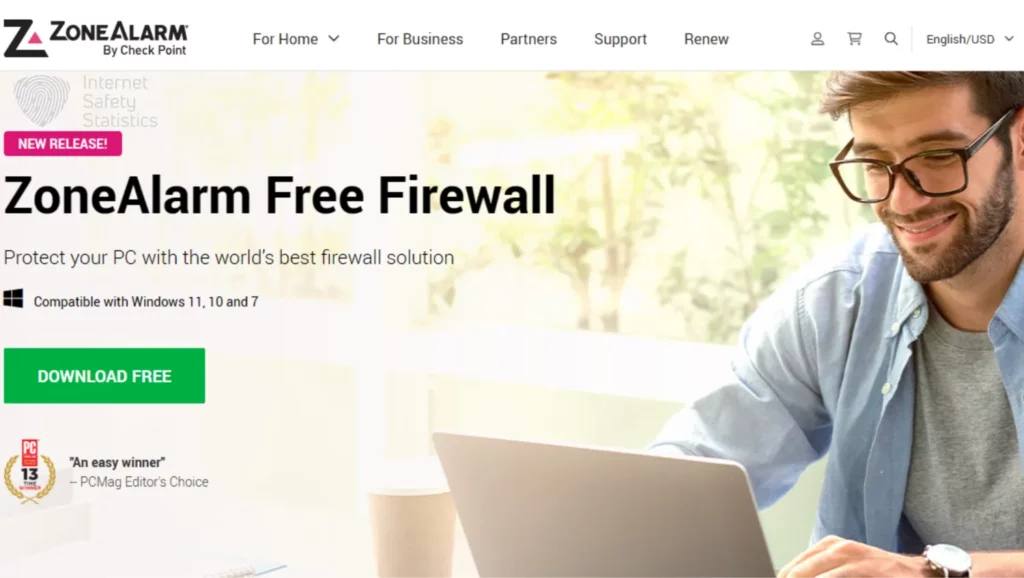
ZoneAlarm Firewall takes a simplified approach to network protection, focusing on ease of use while maintaining effective security standards. Developed by Check Point Software Technologies, the firewall emphasises user-friendly operation without sacrificing protection quality.

Core Security Features

ZoneAlarm’s security model revolves around network zone management, dividing your connections into trusted and untrusted categories. This approach simplifies security decisions whilst providing adequate protection for most users.

  1. Two-Way Firewall Protection monitors both inbound and outbound network traffic, blocking unauthorised connection attempts and preventing data theft by malicious applications. The system automatically detects and blocks common attack patterns without requiring user intervention.
  2. Program Control manages which applications can access the internet, maintaining automatic permissions for recognised software whilst prompting users about unknown programs. This system reduces security alerts compared to more aggressive firewalls.
  3. Identity Protection (available in free version) monitors outgoing data for sensitive information like credit card numbers, social security details, or personal identification data, alerting users when applications attempt to transmit such information.
  4. OSFirewall Technology provides additional protection against operating system vulnerabilities. It monitors system-level activities for suspicious behaviour and blocks exploitation attempts.

Performance Impact and System Requirements

ZoneAlarm prioritises performance efficiency and maintains a lighter system footprint than comprehensive security suites. Resource usage varies depending on system configuration and active features, with generally minimal impact on most modern systems.

System Requirements:

  1. Operating System: Windows 7 SP1, 8, 8.1, 10, 11 (32-bit and 64-bit).
  2. RAM: Minimum 1GB (2GB recommended).
  3. Storage Space: 150MB free disk space.
  4. Processor: 800MHz or faster.

System performance impact typically remains minimal during normal operation. The firewall’s efficient design suits older computers or systems with limited processing power, though actual performance depends on specific hardware configurations and concurrent software applications.

User Experience and Configuration

ZoneAlarm’s interface emphasises simplicity, presenting essential controls through clearly labelled sections. The main dashboard displays firewall status, recent alerts, and quick access to common settings without overwhelming users with technical details.

Setup requires minimal user intervention, with automatic configuration handling most security policies. Advanced users can access detailed settings through expert mode, though the default configuration suits most security needs without modification.

Pricing Structure

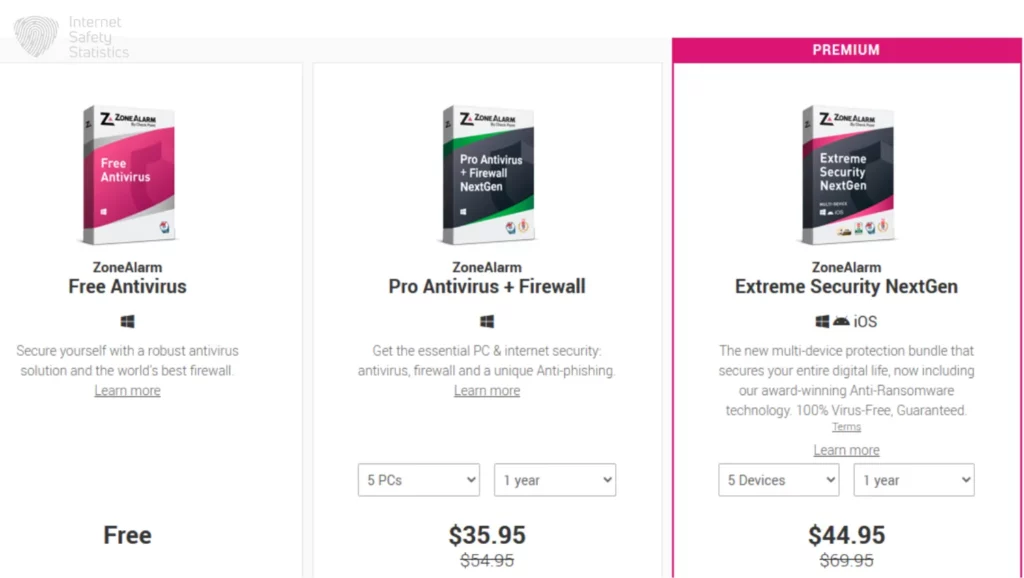
ZoneAlarm offers multiple pricing tiers to accommodate different security requirements and device coverage needs.

  1. Free Version includes core firewall protection, basic identity protection, and email security for single device coverage.
  2. ZoneAlarm’s paid tiers are commonly listed in USD in vendor sources. For example:
    • Pro Antivirus + Firewall – first year typically $32.95 (approximately £24.52) for five devices, with renewal often around $49.95 (approximately £37.19).
    • Extreme Security – first year pricing often around $64.95 (approximately £48.34) for multiple devices, with renewals typically higher.

These approximate GBP conversions are based on mid-market exchange rates (September 2025). Your UK price may differ due to promotions, VAT inclusion, and retailer variations. Always verify the final GBP price and confirm VAT inclusion before purchasing.

Feature-by-Feature Comparison

Comparing specific capabilities helps identify which firewall better suits particular security needs and user preferences. Each solution excels in different areas whilst maintaining adequate protection across core security functions.

Threat Detection and Prevention

Comodo employs proactive threat containment through its auto-sandboxing technology, isolating unknown applications before they can cause system damage. This approach is particularly effective against zero-day threats and advanced persistent threats bypassing traditional signature-based detection.

ZoneAlarm focuses on network-level protection, blocking malicious connections and preventing data exfiltration through comprehensive traffic monitoring. The firewall excels at stopping botnet communications and preventing unauthorised remote access attempts.

Verdict: Comodo provides superior protection against unknown malware, while ZoneAlarm offers better intrusion prevention.

System Performance Impact

ZoneAlarm uses fewer resources, making it suitable for systems with limited processing power or users who prioritise system responsiveness. The firewall operates efficiently in the background without noticeable performance degradation.

Comodo’s comprehensive monitoring requires additional system resources, particularly during initial application learning phases. Users with powerful systems typically experience minimal impact, though older computers may show noticeable slowdowns.

Verdict: ZoneAlarm wins for performance-conscious users, particularly those with older hardware.

Ease of Use and Configuration

ZoneAlarm’s simplified interface reduces the learning curve for security newcomers, providing effective protection without requiring extensive technical knowledge. Default settings provide adequate security for most users without modification.

Comodo offers extensive customisation options for security enthusiasts willing to invest time in configuration. The firewall rewards patient users with precise control over security policies and application behaviours.

Verdict: ZoneAlarm suits beginners and casual users, whilst Comodo satisfies advanced users seeking maximum control.

Privacy and Data Handling

Both firewalls collect minimal user data compared to comprehensive antivirus suites, though their approaches differ significantly.

  1. Comodo’s Privacy Policy includes the collection of diagnostic information, application usage patterns, and anonymous threat intelligence data. Users can opt out of data collection through privacy settings, though some features may be limited. The company maintains servers within EU jurisdiction, ensuring UK users’ GDPR compliance.
  2. ZoneAlarm’s Data Practices under Check Point ownership follow enterprise-grade privacy standards. The firewall collects minimal telemetry data, primarily for threat intelligence purposes, with clear opt-out mechanisms available. Check Point’s Israeli headquarters operates under strict data protection regulations and has established UK data processing agreements.
  3. Verdict: Both maintain acceptable privacy standards, with ZoneAlarm having a slight edge due to enterprise-grade policies.

Long-Term Reliability and Updates

Software maintenance and update frequency affect long-term security effectiveness and user experience.

  1. Comodo Update Schedule includes monthly signature updates and quarterly feature releases. The company has maintained consistent update schedules over the past five years, though occasional delays occur during major Windows updates. Known issues are typically resolved within 2-4 weeks of discovery.
  2. ZoneAlarm Update Frequency benefits from Check Point’s enterprise security infrastructure, with weekly threat intelligence updates and bi-monthly software improvements. Critical security patches typically deploy within 24-48 hours of vulnerability disclosure.
  3. Verdict: ZoneAlarm provides more frequent updates and faster security response times.

User Persona Recommendations

Comodo Firewall vs ZoneAlarm, Recommendations

Selecting the appropriate firewall depends on your technical expertise, security priorities, and system usage patterns. Different user types benefit from distinct approaches to network protection.

For Security Beginners

New users seeking reliable protection without complexity should consider ZoneAlarm’s streamlined approach. The firewall provides adequate security through automated policies whilst minimising user intervention requirements.

ZoneAlarm’s benefits for beginners include minimal configuration requirements, clear security alerts with plain English explanations, and reliable customer support through multiple channels. The firewall operates effectively with default settings, reducing the risk of misconfiguration that could compromise security.

For Advanced Users

Experienced users who enjoy fine-tuning security settings typically prefer Comodo’s comprehensive control options. The firewall rewards technical investment with precise security policies and detailed threat information.

Comodo’s advantages for power users include granular application controls, custom security rules, detailed logging and reporting, and advanced threat analysis tools. The firewall allows the creation of complex policies tailored to specific security requirements.

For Gamers and Performance Users

ZoneAlarm’s efficient design benefits users prioritising system performance while gaming or running resource-intensive applications. The firewall maintains protection without competing for system resources during demanding activities.

ZoneAlarm’s gaming mode automatically reduces security prompts during full-screen applications while maintaining background protection. The firewall’s minimal resource usage ensures stable frame rates and responsive system performance.

For Privacy-Conscious Users

Users concerned about data collection and privacy should carefully evaluate each firewall’s data handling practices. Both solutions offer privacy controls, though with different approaches to user data management.

ZoneAlarm’s enterprise heritage includes established privacy policies and minimal data collection practices. Comodo provides detailed privacy controls allowing users to extensively customise data sharing preferences.

Installation and Configuration Best Practices

Proper installation and initial configuration ensure optimal firewall performance whilst avoiding common setup issues. Following established procedures reduces compatibility problems and improves security effectiveness.

Pre-Installation Preparation

Before installing either firewall, complete these essential preparatory steps to ensure smooth deployment and avoid potential conflicts.

  1. System Preparation:
    • Create a system restore point.
    • Disable Windows Firewall temporarily.
    • Close all running applications.
    • Ensure administrative privileges are available.
    • Verify minimum system requirements are met.
  2. Security Software Audit: Document existing antivirus software, VPN clients, and security utilities installed on your system. Some combinations may require specific configuration adjustments to prevent conflicts.
  3. Network Configuration Backup: Record current network settings, including static IP addresses, DNS servers, and proxy configurations, to facilitate restoration if installation issues arise.

Common Installation Issues and Solutions

Both firewalls may encounter specific installation challenges depending on system configuration and existing software conflicts.

  1. Windows Defender Conflicts: Disable Windows Defender Firewall completely before installing third-party alternatives. Windows may re-enable its firewall automatically after system updates, requiring manual reconfiguration.
  2. Antivirus Compatibility: Some antivirus solutions include firewall components that conflict with standalone firewalls. Configure antivirus software to disable firewall features before installation, or consider integrated security suites instead.
  3. Network Connectivity Issues: The initial firewall deployment may temporarily disrupt internet connectivity. If connection problems persist after installation, restart your router and network adapters.
  4. Permission Errors: Installation failures often result from insufficient administrative privileges. To resolve permission conflicts, right-click installer files and select “Run as administrator.”

Essential Configuration Steps

Both firewalls require initial configuration to balance security protection with usability convenience.

  1. Comodo Initial Setup:
    • Run the firewall in Training Mode for 24-48 hours.
    • Review automatic security decisions and adjust policies.
    • Configure trusted applications and safe network zones.
    • Set appropriate alert levels for your comfort preferences.
    • Enable automatic updates for signatures and program definitions.
  2. ZoneAlarm Initial Setup:
    • Complete the initial security wizard with recommended settings.
    • Configure program permissions for frequently used applications.
    • Set privacy controls for identity protection features.
    • Adjust alert frequency to match your security knowledge level.
    • Enable automatic updates and background protection.

Troubleshooting Common Problems

Understanding frequent issues and their solutions helps maintain optimal firewall performance and resolve problems quickly when they arise.

Firewall software occasionally causes system slowdowns or application conflicts that require specific resolution approaches.

  1. High CPU Usage: Comodo may consume excessive processor resources during initial learning phases or when scanning large numbers of unknown files. Adjust real-time scanning sensitivity or enable Gaming Mode to temporarily reduce resource consumption.
  2. Slow Internet Browsing: Both firewalls can impact browsing speed if configured too aggressively. Check packet inspection settings and consider reducing deep packet analysis for trusted websites and applications.
  3. Application Launch Delays: Sandboxing and application analysis may slow program startup times. To reduce analysis overhead, create trusted application lists for frequently used software.

Connectivity and Network Issues

Network connectivity problems represent common firewall-related issues that users can typically resolve through configuration adjustments.

  1. Blocked Internet Access: Overly restrictive firewall rules may prevent legitimate internet connectivity. Review recent security alerts and adjust blocked application permissions as needed.
  2. VPN Compatibility Problems: Virtual private networks may conflict with firewall policies, requiring specific configuration adjustments. Configure firewall rules to allow VPN client applications and protocols.
  3. Gaming and P2P Issues: Online games and peer-to-peer applications often require specific port configurations. Create custom rules allowing required ports and protocols for affected applications.

Security Alert Management

Managing security alerts effectively prevents alert fatigue whilst maintaining appropriate security awareness.

  1. Excessive Security Prompts: New installations often generate numerous security alerts during the learning period. Review alert patterns and create permanent rules for trusted applications to reduce prompt frequency.
  2. False Positive Alerts: Legitimate applications may trigger security warnings due to unusual behaviour patterns. Research reported applications and create exceptions for verified safe software.
  3. Understanding Alert Types: Learn to distinguish between critical security threats and routine permission requests to make informed decisions about alert responses.

The Final Verdict: Our Recommendation

Choosing between Comodo and ZoneAlarm depends primarily on your technical expertise, performance requirements, and security priorities. Though they excel in different areas, both firewalls provide adequate protection for most users.

  1. Choose Comodo Firewall if:
    • You possess advanced technical knowledge and enjoy configuring security settings.
    • Maximum protection against unknown threats is your primary concern.
    • System performance is less important than comprehensive security features.
    • You’re willing to invest time learning complex security policies.
  2. Choose ZoneAlarm Firewall if:
    • You prefer simple, automated security with minimal user intervention.
    • System performance and resource efficiency are important considerations.
    • You’re new to firewall software and want user-friendly operation.
    • Reliable protection with straightforward configuration meets your needs.

For most home users, ZoneAlarm provides the optimal balance between security effectiveness and ease of use. Its streamlined approach delivers solid protection without requiring extensive technical knowledge or system resources.

Advanced users and security professionals prefer Comodo’s comprehensive features and granular control options, despite the steeper learning curve and higher resource requirements.

Selecting the right firewall requires balancing security effectiveness, usability preferences, and system constraints. ZoneAlarm excels for users seeking reliable protection with minimal complexity, whilst Comodo rewards technical users with comprehensive security features and detailed control options. Both solutions provide effective network protection when properly configured and maintained, making your choice primarily dependent on technical comfort level and specific security requirements rather than fundamental protection capabilities.